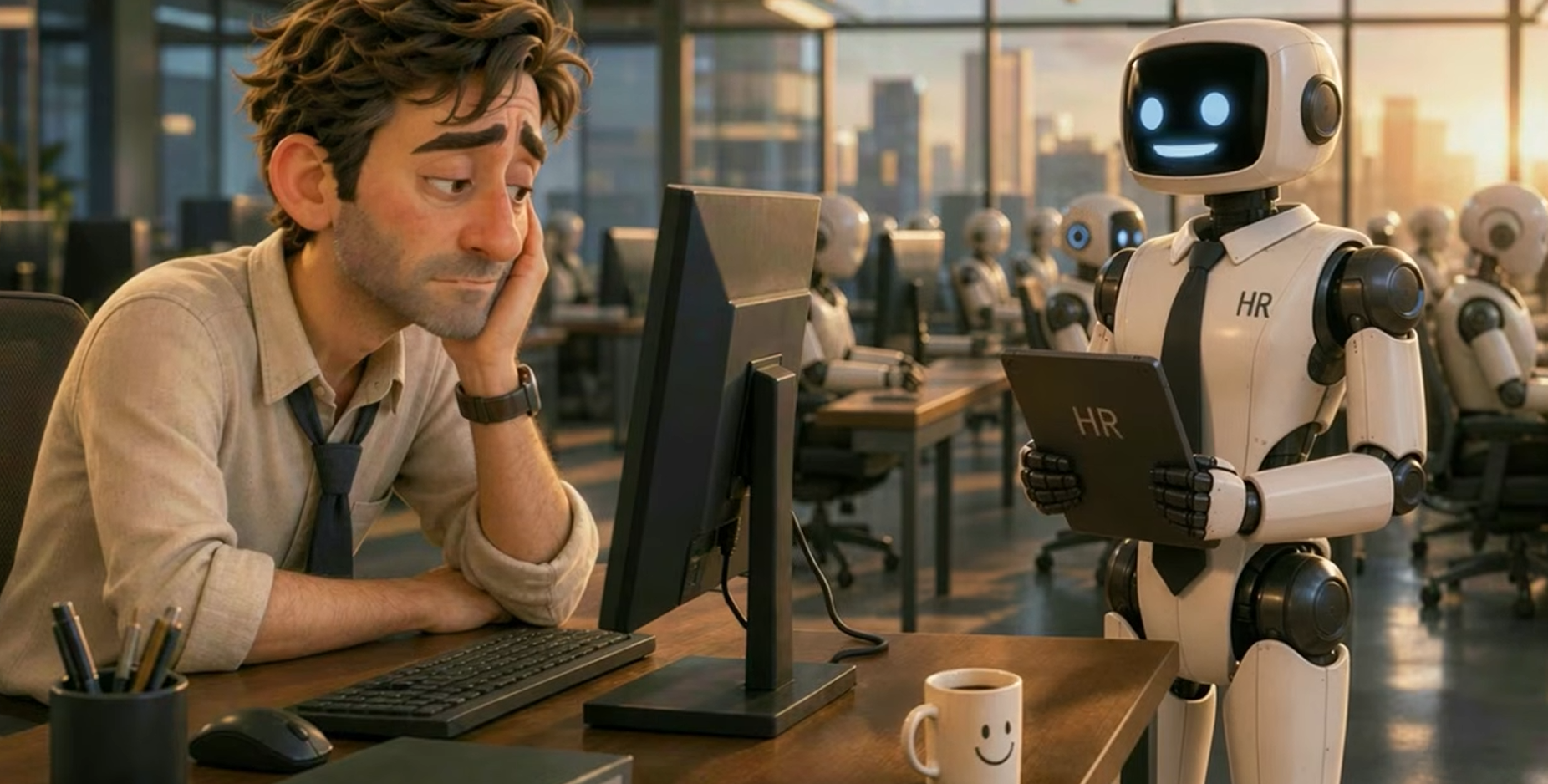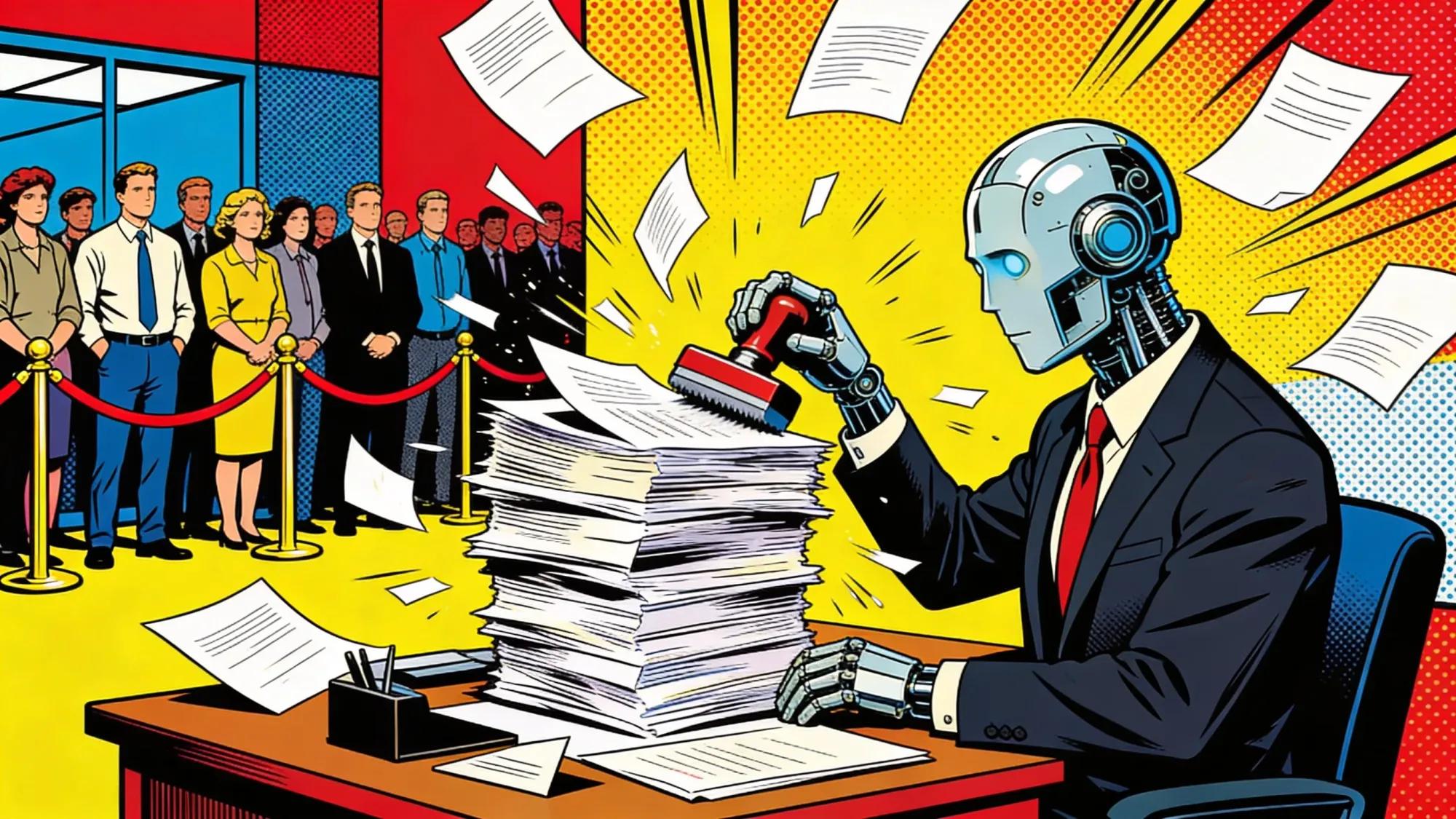

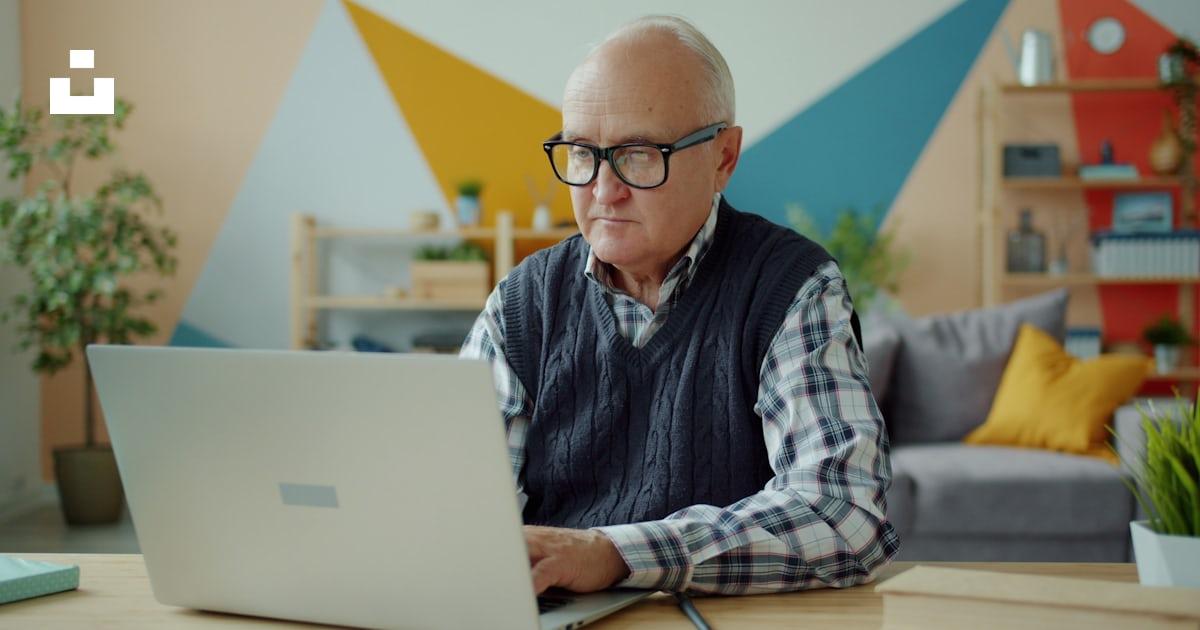
We like to talk about longer lives, higher retirement ages, and a society in which people are expected to remain healthy and active for longer than ever before. Yet there is a strange contradiction. The older we become, the less our experience seems to be valued. The labour market loses interest, technology advances without us, and society gradually begins to see us as people who need help rather than people who still have something to contribute. But what if new technology, particularly artificial intelligence, could change precisely that? There is a form of exclusion that rarely makes the headlines. It is not necessarily about poverty, illness, or loneliness, although all of these may play a part. It is about something more difficult to define: the feeling of no longer being needed. Of having spent an entire lifetime accumulating knowledge, experience, relationships, and the ability to solve problems, only to discover that the world gradually stops asking for what you know. The phone rings less often. Professional connections disappear. Nobody asks for your opinion anymore. And eventually, perhaps, you begin to question whether you still have anything to offer.
I am approaching 65 myself, and I have increasingly found myself reflecting on this strange social mechanism. After many years working in production, international projects, technology, and creative problem-solving, I have accumulated experience that remains useful. Yet society's traditional way of measuring competence is closely tied to employment, professional titles, and age. When those structures disappear, a person's sense of being valued can begin to disappear with them. This is not simply a labour market problem. It is a question of human dignity, identity, and how we understand what a long life should actually contain.
When Experience Suddenly Becomes a Liability
Ageism is a term used to describe prejudice, stereotypes, and discrimination based on a person's age. It can affect both younger and older people, but for older adults, its consequences can be particularly far-reaching. In its 2021 global report, the World Health Organization estimated that approximately one in two people worldwide hold ageist attitudes. The organisation also links ageism to social isolation, poorer health, and reduced quality of life. This is therefore much more than a problem of inappropriate remarks or disrespectful behaviour. It is a structural issue that influences the opportunities people are given and, eventually, how they begin to see themselves.
What makes this particularly strange is that ageism often begins long before retirement. People may start noticing changes in their opportunities in the labour market as early as their fifties. Experience that was previously regarded as an advantage suddenly begins to be described in different terms. Someone may be considered too expensive, insufficiently flexible, or assumed to have difficulty learning new technology. The OECD's Employment Outlook 2025 shows that older workers continue to face significant barriers, including discrimination in recruitment and fewer opportunities for professional development. Employers tend to underestimate older people's ability and willingness to acquire new skills. The result can become a self-fulfilling prophecy: people who are not given opportunities to develop are eventually regarded as people who are incapable of developing.
But what exactly suggests that a 62-year-old should be less creative than a 32-year-old? Or that someone who has spent forty years solving complicated problems has somehow lost the ability to think in new ways? Of course, we change as we grow older. Some abilities are affected by ageing, while others may develop through experience. But we are not replaceable machines with an expiration date. Someone who has experienced failures, conflicts, technological changes, economic crises, and countless human encounters has often developed a kind of judgement that cannot be taught during an introductory training course. Yet we seem to have created a society in which the future is associated with youth, while experience is increasingly assigned to the past.
Perhaps the most damaging consequence occurs when this external judgement becomes an internal conviction. When someone stops suggesting ideas because they no longer believe anyone wants to listen. When a person decides not to apply for a job, participate in a project, or explore an idea because they already expect rejection. At that point, ageism has moved beyond the labour market. It has begun to limit people's own understanding of what is still possible.
A Digital Society That Waits for No One
At the same time, society is undergoing a technological transformation that is difficult to compare with anything in recent history. Banking, healthcare, public services, ticketing, payments, and communication have moved into digital systems. Much has become easier for those who understand the technology. But for those who do not, even ordinary everyday activities can become obstacles. Booking an appointment, verifying your identity, or understanding a digital notification now requires skills that were previously unnecessary. And when the alternatives disappear, technology changes from being an opportunity into becoming a requirement.
The Swedish Internet Foundation's Swedes and the Internet 2026 report shows that 23 percent of Swedes aged 76 and older do not use the internet. Among pensioners over 65, the corresponding figure is 14 percent. Digital exclusion is therefore far from having disappeared, even though the use of online services has increased. But there is another dimension that these statistics cannot fully capture. Owning a smartphone does not necessarily mean feeling comfortable using it. Being able to pay a bill online does not mean having the confidence to experiment with new services. Some people are technically connected to the internet but, in practice, move within a very limited part of the digital world.
This is where I think we need to start asking some uncomfortable questions. Why do we so often assume that the problem lies with the user? Why is an older person expected to adapt to every new interface, every update, and every change in login procedures? We have become remarkably efficient at digitising society's services, but considerably less successful at ensuring that people can actually use them. Companies and public authorities frequently talk about user-friendliness, yet their starting point is often someone who is already digitally confident. Anyone who needs more time, a human explanation, or an alternative way of making contact risks being treated as an exception.
This is also about independence. An adult who has spent an entire lifetime managing their finances, work, and personal relationships may suddenly find themselves asking their children or grandchildren for help with basic matters. That help is probably often offered with genuine care, but it can still affect a person's sense of dignity and confidence. Constantly having to ask for assistance is not the same as being able to make your own choices. When digitalisation is introduced without sufficient consideration for people's different circumstances, it can create a new form of dependency in the very society that claims to value individual freedom.
Artificial Intelligence Could Change the Rules of the Game
But something is happening now that I believe may prove far more important than many people have yet realised. Artificial intelligence is beginning to change the relationship between humans and technology. For decades, we have had to learn the language of computers, understand the logic of software, and adapt our ways of working to technological limitations. Now we are beginning to do the opposite. We can describe what we want to achieve in ordinary language, ask questions, discuss solutions, and allow technology to help us carry out parts of the work.
That does not mean AI automatically makes everything easy or that knowledge has suddenly become irrelevant. On the contrary, good judgement is essential for evaluating information, identifying mistakes, and deciding whether a solution actually works. AI can also produce convincing inaccuracies and introduce entirely new security risks. But the fundamental change is that the barriers to digital creation can be dramatically reduced. A person does not necessarily need to master a programming language to begin developing an idea into a simple digital prototype.
And this is where an opportunity emerges that I believe is almost entirely missing from the debate about older people and digitalisation. We constantly discuss how older adults should learn to use technology developed by others. Much less frequently do we ask what older people themselves might want to create with this new technology.
A former nurse may have ideas about how patient information could be improved. A skilled tradesperson may understand practical problems that no software developer has ever encountered. A teacher might want to build a simple educational tool. Someone who loves gardening, music, history, or travelling may have carried an idea for years without ever having the resources to bring it to life. There is an enormous difference between having to learn a digital system and discovering that a digital system can help you create something of your own. In the first situation, you are a student of technology. In the second, technology becomes a tool for your own experience and imagination.
Figures from the Swedish Internet Foundation in 2026 show that around 30 percent of pensioners who use the internet also use AI services, compared with 70 percent of people under 65. The difference remains substantial, even though AI adoption has increased sharply among older users as well. The question is what might happen if more people had the opportunity to discover AI through their own interests and ambitions rather than through yet another lecture about technology's opportunities and risks. Perhaps this is precisely where we could begin to break some of the patterns that have reinforced exclusion for so long.
Technology does not become democratic simply because it is available. It becomes democratic when people from different backgrounds, financial circumstances, educational experiences, and age groups can genuinely use it for their own purposes.
PROTO PLUS – Experience Has No Retirement Age
These are the thoughts that led me to begin developing PROTO PLUS, an initiative within my independent digital idea workshop, Made by PROTO. The fundamental idea is actually quite simple. People over 60 should not merely be offered help in understanding digital development. They should have the opportunity to participate in it themselves, explore their own ideas, and discover what they can achieve using AI and other modern tools.
I have no interest in creating yet another initiative where older people are expected to sit quietly while someone younger explains how the world works. I want to create an environment where life experience is treated as the starting point, not as an obstacle. A place where people can bring their own ideas, whether large or small, and receive practical support in exploring whether those ideas can become reality. It might involve a simple app, a digital service, a creative project, or a solution to an everyday problem. The objective is not for everyone to become an entrepreneur or start a business. The objective is to rediscover the possibility of being active, curious, and creative.
The first planned activity within PROTO PLUS is a free 90-minute online workshop in Swedish for people over 60. I want to demonstrate how someone can move from an experience or an idea towards the first steps of creating a digital prototype, without needing programming knowledge. Over time, the ambition is to develop workshops in several languages, a network for sharing experiences, and opportunities for participants to continue developing their own projects. But the most important measure of success will not be how many apps are created or how technically advanced they become. It will be what happens to someone's self-confidence when they discover that they can still learn, contribute something meaningful, and create something new.
I also believe the social dimension is at least as important as the technology itself. Meeting other people in similar circumstances, exchanging experiences, and helping one another can, in itself, reduce some of the isolation that sometimes accompanies retirement. It does not have to mean replacing working life with another form of working life. Many people have worked more than enough and are entirely entitled to enjoy their freedom. But freedom becomes more meaningful when it also includes the opportunity to choose something new. A person may want to work less without wanting to think less, create less, or become less involved in life.
From personal experience, I know how much it means to turn an idea into something tangible. Throughout most of my professional life, even relatively modest projects required people, money, organisations, and often substantial technical resources to become reality. Today, a single individual with a computer, AI, and enough curiosity can achieve things that would previously have been far beyond their reach. That transformation is not reserved for young programmers or technology companies. It should be accessible to someone who has turned 65, 70, or 80 as well.
At the same time, an initiative like this must be built on respect for individual circumstances. Not everyone wants to learn AI. Not everyone can use the same tools. Financial barriers, disabilities, language difficulties, and concerns about digital fraud must be taken seriously. Nobody should have to become a digital creator to be regarded as a participating member of society. PROTO PLUS can contribute to creating more opportunities, but it must never become an excuse for withdrawing human services or placing the entire responsibility for digitalisation on individuals.
People Have Not Become Too Old – Our Attitudes Towards Age Need to Change
I believe we are approaching a crossroads. We can continue to regard an ageing population primarily as an economic and organisational challenge. More pensioners, greater healthcare needs, higher costs, and fewer people of working age. These are real issues that must be addressed. But if that becomes the only story we tell, we risk turning the accumulated experience of millions of people into an economic liability rather than recognising it as an asset.
Or we can begin to look at the later decades of life differently. Not merely as a period of winding down, but as a possible continuation of human development. Many of us will live twenty or thirty years beyond the traditional end of our working lives. That is a substantial part of a human lifetime. Should those years be devoted primarily to preserving what has already happened, or should there also be room for new ambitions, knowledge, relationships, and discoveries?
Technology alone cannot solve ageism, of course. We need employers willing to look beyond someone's year of birth, educational systems that welcome people of every age, and public services designed with genuine respect for those who are not digitally confident. Above all, we need to challenge the strange assumption that a person's human value somehow decreases as their value in the labour market changes.
But I believe AI really can open a door that has remained closed for a long time. Not because technology is some miraculous solution, but because it can give people access to new tools for independence and creativity. It can make it possible to begin again, explore an idea, or find a new sense of belonging without first having to ask permission from an employer, investor, or organisation.
For me, this is ultimately what PROTO PLUS is about. Challenging the feeling of being finished, obsolete, or no longer needed. Creating opportunities for people who still have ideas but may have lost the environments in which those ideas could come to life. Not by promising everyone a new career, but by reminding us that curiosity and the desire to create do not have a fixed retirement age.
We have spent decades developing technology that makes human beings redundant in certain tasks. Perhaps it is time we also developed ways of using technology that allow more people to feel included, independent, and valued.
Because not having to work anymore is one thing.
Feeling that you are no longer needed is something entirely different.
And that distinction should matter to all of us.
PROTO PLUS – Your Experience Has No Retirement Age.
Learn more about PROTO PLUS and register your interest in the first workshops.